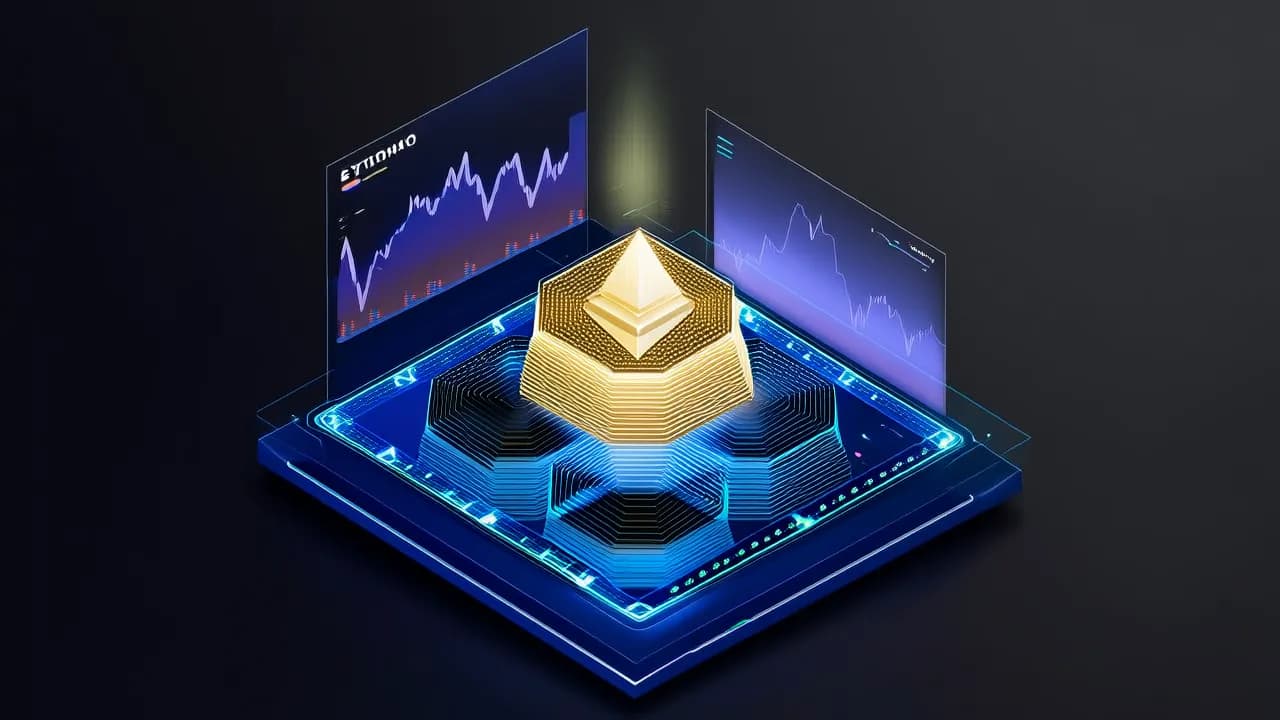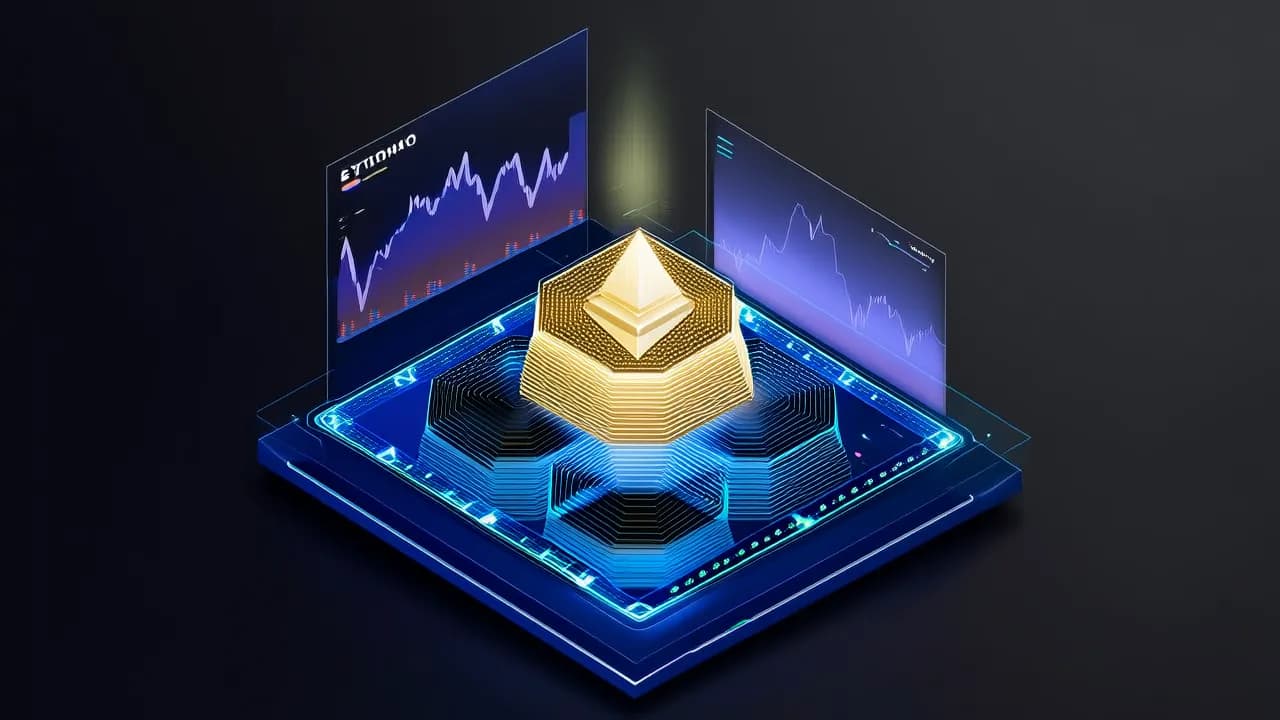
The Silent Revolution: Ethereum's Economic Engine is Evolving
While spot prices dominate daily headlines, a structural transformation is underway within the Ethereum ecosystem. The network's trajectory toward 2026 isn't just about faster transactions; it's a fundamental rewrite of value accrual for ETH holders. For traders and newcomers alike, understanding the interplay between Layer2 expansion, fee markets, and staking rewards is no longer optional—it's the key to navigating the next market cycle.
Current market data reveals a divergence: user activity is migrating to rollups, yet mainnet settlement remains the bedrock of security. This shift creates unique arbitrage opportunities and yield dynamics that sophisticated market participants are already exploiting. With regulatory frameworks stabilizing globally and institutional capital eyeing tokenized assets, Ethereum's scaling narrative has matured from technical speculation to an economic imperative. Traders who grasp these mechanics now can position themselves ahead of the broader market realization.
The Revenue Paradox: When Efficiency Meets Supply Dynamics
The introduction of blob transactions dramatically reduced costs for rollups, sparking a surge in Layer2 adoption. However, this efficiency introduces a complex feedback loop. Blob fees created a distinct market for data availability, separating execution costs from settlement costs. As data becomes cheaper, the burn rate on the base layer can decelerate during periods of moderate congestion, altering the supply-demand equilibrium that traders relied upon in previous cycles.
Long-term models suggest that by 2026, the network must balance ultra-low fees with sufficient value capture to maintain deflationary pressure. Traders should monitor the ratio of sequencer revenue to base layer fees. A widening gap may signal upcoming protocol adjustments or renewed debates over fee redistribution mechanisms. For the active investor, these macro-technical indicators often precede volatility spikes, offering strategic entry points for those tracking on-chain fundamentals rather than just price charts.
Real-World Assets Meet Infinite Scale: The Institutional Catalyst
Scaling is the gateway for the trillion-dollar tokenization wave. Financial giants require throughput that guarantees instant settlement without exorbitant costs. Ethereum's multi-chain architecture is positioning itself as the global settlement layer for RWA (Real-World Assets). In plain language, RWA refers to bringing traditional value—such as treasury bills, real estate deeds, or commodities—onto the blockchain as tradeable digital tokens. This bridges the gap between legacy finance and decentralized markets.
- Liquidity Unification: Scaled networks allow RWAs to be used as collateral across DeFi protocols without friction, unlocking capital efficiency.
- Regulatory Compliance: Layer 2 solutions can embed identity verification directly into the chain, satisfying institutional mandates for KYC and AML.
- Yield Generation: Tokenized assets provide stable yield streams that can be composited with ETH staking rewards for enhanced returns.
As 2026 approaches, expect a convergence where scaling upgrades directly correlate with inflows from traditional finance. Traders who recognize which ecosystems attract the deepest RWA liquidity will have a distinct edge in allocating capital effectively.
Staking 2.0: Navigating Yield Compression and Restaking Risks
The staking landscape is fragmenting. Native ETH staking offers security, but the rise of restaking protocols and Layer 2 native yields is creating a competitive environment for capital. Yield compression is a tangible risk as more ETH enters staking contracts and alternative chains offer subsidized rewards to attract liquidity. Furthermore, the emergence of peer-to-peer staking pools aims to reduce centralization, offering retail traders more options to stake smaller amounts without trusting centralized intermediaries.
Smart money is diversifying across the risk spectrum. This involves balancing core ETH holdings with strategic exposure to high-performance Layer 2 governance tokens and liquid restaking derivatives. However, complexity brings smart contract risk. Due diligence is paramount. The interaction between staking yield and gas markets means that during network surges, unstaking queues and liquidity premiums can create short-term trading opportunities for agile participants who monitor validator health and withdrawal queues.
How to Get Started: Positioning for the Scaling Era
Engaging with Ethereum's evolving ecosystem requires reliable infrastructure. Whether you are accumulating spot ETH, trading Layer 2 altcoins, or exploring derivatives, choosing the right platform is essential for execution and security.
- Binance: Ideal for traders prioritizing deep liquidity and tight spreads. As the largest global exchange, Binance offers comprehensive ETH pairs, staking products, and seamless access to major Layer 2 tokens, making it a robust choice for both beginners and high-volume participants.
- OKX: A powerhouse for Web3 integration and futures trading. OKX provides advanced tools for hedging ETH exposure and a unified account system that simplifies managing assets across multiple chains. Their Web3 wallet also allows direct interaction with scaling protocols and DeFi apps.
- Gate.io: The go-to destination for altcoin diversity. If your strategy involves early exposure to emerging Layer 2 projects or niche RWA tokens, Gate.io lists a vast array of assets often before other major platforms, offering early-mover opportunities for research-driven investors.
To begin, register an account on your preferred exchange, complete identity verification, and deposit funds. Start by analyzing ETH support levels and Layer 2 momentum indicators before deploying capital. Remember, the scaling narrative favors those who combine patience with active risk management.
Market Context and Risk Management
The path to 2026 is not linear. Macroeconomic headwinds, interest rate fluctuations, and evolving regulatory stances in key jurisdictions can impact crypto valuations. While Ethereum's technological moat strengthens, competition from alternative Layer 1 chains remains fierce. Traders must stay informed about ETF flow data, developer activity metrics, and governance proposals that could alter the economic parameters of the network. Diversification and strict position sizing remain the best defenses against market uncertainty.
Disclaimer: This content is for informational purposes only and does not constitute financial advice. Cryptocurrency investments carry significant risk, including the potential loss of principal. Always conduct your own research and consult a qualified financial advisor before making investment decisions.