What Happened? And Why It Matters Directly to Your Crypto Earnings Goals
In August 2026, U.S. asset management giant Franklin Templeton—overseeing more than $1.5 trillion in assets—achieved a landmark: it officially integrated an 'on-chain money market fund' into traditional mutual funds and ETFs. In simple terms: previously, when you bought a fund, your money went into a bank account; now, the fund can directly hold 'tokenized cash on-chain' (e.g., stablecoin fund tokens like USDC or TUSD) and even use those tokens as collateral to borrow more capital.
For beginners, this doesn’t mean you need to immediately study SEC letters or decode ETF structures. What it truly signals is: Mainstream institutions are making crypto assets ‘familiar’—transforming them into products as accessible, regulatorily backed, and instantly tradable as Yu’e Bao or spare-change investment tools. You don’t need to be an expert—just open an exchange account, deposit $100, and click ‘Buy’ to participate in the first wave of tokenized wealth management products available to the general public.
How to Get Started? 3 Steps to Your First Tokenized Asset Purchase (2026 Beginner Edition)
Don’t be intimidated by the term ‘tokenized fund’—what you can buy today isn’t Franklin Templeton’s original institutional product (which remains unavailable to retail investors for now), but rather its underlying supporting assets: stablecoins (e.g., USDC), compliant on-chain fund tokens (e.g., $FXS, fund tokens native to the $MATIC ecosystem), and future DeFi yield tokens pegged to U.S. Treasuries or short-duration bonds. All of these are available for direct fiat purchase on major exchanges.
✅ Step 1: Choose & Open an Exchange Account Suitable for Beginners (3 Minutes)
- Binance: Best for first-time buyers. Cleanest interface, supports WeChat/Alipay/bank transfers for deposits, and offers 24/7 Chinese-language customer support. Key point: Its spot market offers the most stable USDC, DAI, and USDT pricing and the lowest fees—ideal for beginners who might accidentally click into derivatives.
- OKX: If you plan to explore ‘auto-interest-earning’ or ‘staking rewards’ later, OKX’s Web3 wallet and ‘Earn’ features are more beginner-friendly. It also supports fiat purchases of stablecoins and has already launched test access to multiple tokenized Treasury projects (e.g., $USDT-ShortBond).
- Gate.io: If you hear about ‘Franklin Templeton partner launches’ or ‘first listings of new tokenized fund tokens’, Gate.io is often among the earliest platforms to list them. It offers broad altcoin selection—but beginners should start here by buying stablecoins, then transfer them elsewhere for dollar-cost averaging.
✅ Step 2: Complete KYC + Deposit $100 (Mobile-Only)
- Download the official app (verify the domain ends in .com—never click ads);
- Register with your phone number → upload both sides of your ID → complete facial recognition (takes ~90 seconds);
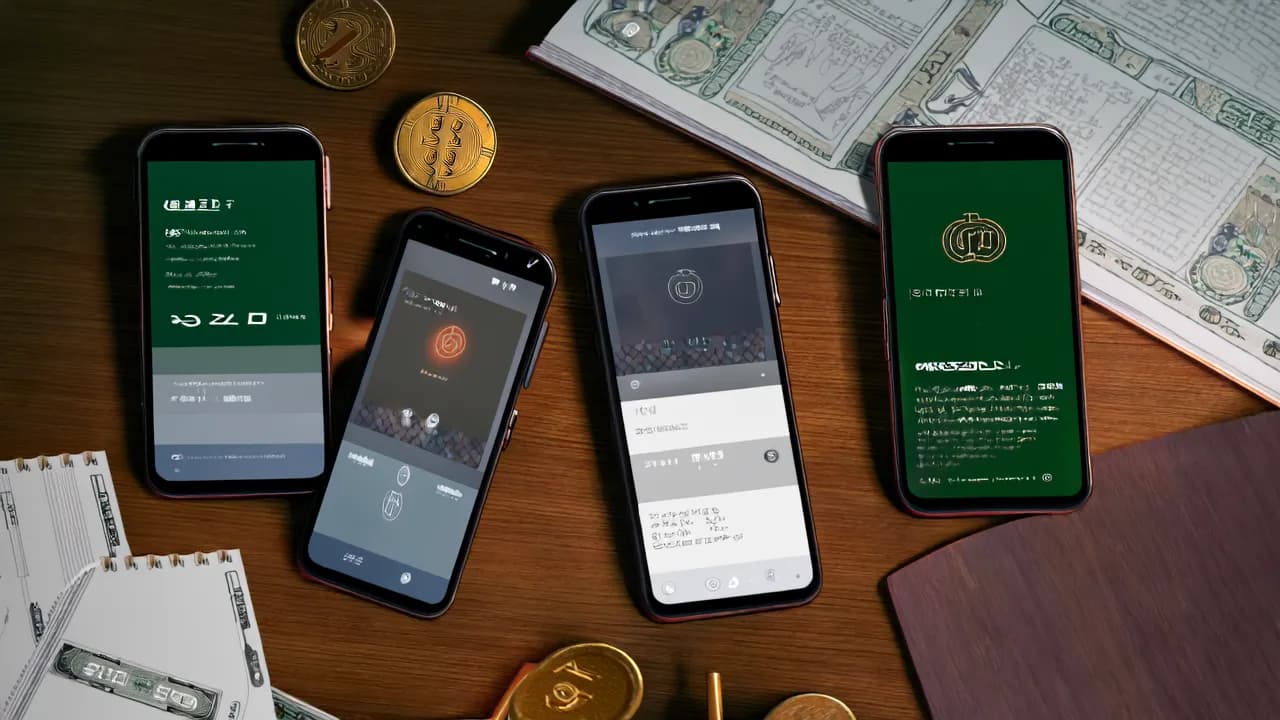
- Tap ‘Deposit’ → select ‘USDT’ or ‘USDC’ → choose ‘Bank Card/Alipay’ → enter the RMB equivalent of $100 (~¥720) → confirm receipt (usually within 3 minutes).
✅ Step 3: Buy Your First Tokenized Asset (1 Minute)
In the app’s search bar, type: USDC/USDT → enter the trading page → select ‘Market Order’ → enter amount (e.g., $50) → tap ‘Buy’ → done! What you now hold isn’t paper money—it’s digital cash, pegged 1:1 to the U.S. dollar, redeemable anytime, and operating live on Ethereum or the BNB Chain.
💡 Beginner Tip: No rush to buy ‘fund tokens’. Start practicing with USDC: deposit → observe interest accrual → withdraw → swap to BTC/ETH. Once you’re comfortable with on-chain transfer speeds and fees, advance to tokenized bonds, gold, or short-duration bond funds.
4 Most Common Questions from Beginners
What’s the minimum starting amount?
$100 is enough. Binance and OKX allow USDC purchases as low as $1; Gate.io supports purchases starting at just 0.1 USDT. Ignore claims like ‘$10,000 minimum’—that’s a private placement threshold, not what applies to you today.
Which exchange should I pick among the three?
Remember this rhyme: ‘Buy steady? Use Binance. Want yield? Try OKX. Chase new listings? Watch Gate.io.’ Beginners should start with Binance, complete the full workflow, then open a second account to compare fee structures.
What are the two main risks? Can I get my money back? Could it go to zero?
First, mainstream stablecoins like USDC and USDT are backed by real USD reserves and verified by third-party audits—not ‘air coins’. Second, exchanges themselves carry asset insurance (e.g., Binance’s SAFU Fund, OKX’s user asset segregation), making them far safer than P2P platforms or obscure exchanges. The biggest actual risks? Forgetting your password, clicking phishing links, or impulsively over-leveraging.
Should I go all-in at once?
Absolutely not. Use only $100 for your first trial—even if you lose it all, your daily life won’t be affected. The real beginner strategy is: on a fixed date each month, allocate 1–3% of your salary to buy USDC, then gradually convert portions into BTC or ETH. This is called ‘dollar-cost averaging’—and in 2026, it remains the safest, most reliable entry point for newcomers.
One Final Straightforward Truth
Franklin Templeton’s announcement isn’t an invitation—it’s a signal: crypto-based wealth management has evolved from a ‘geek toy’ into a ‘new window next to the bank counter’. You don’t need to read regulatory filings. Just open the app and complete three taps—and you’ll stand in the front row of how ordinary people earn with crypto in 2026. Coin12345 reminds: All investments carry risk. Past performance does not guarantee future results. Principal is at risk. This is not investment advice.